How to Buy a Used Car in South Africa — The Complete 2026 Guide
How to Buy a Used Car in South Africa — The Complete Guide
Buying a used car in South Africa can save you hundreds of thousands of rands compared to buying new. But it also comes with risks if you don't know what to look for.
This guide covers everything you need to know to buy a quality used car with confidence.
Step 1: Set Your Budget
Before you start browsing, determine your total budget. Remember to factor in:
- Purchase price — The car itself
- Transfer fees — Approximately R500–R1,000
- Registration — Varies by province
- Insurance — Get quotes before you buy
- Immediate maintenance — Budget R5,000–R15,000 for any immediate fixes
Pro tip: If you're financing, get pre-approved before shopping. This gives you negotiating power and prevents falling in love with a car you can't afford.
Step 2: Research the Market
Use dbAuto to research prices for the make and model you're interested in. Check multiple listings to understand fair market value.
Popular searches on dbAuto: - Cars under R200,000 - SUVs for sale - Bakkies for sale - Sedans for sale
Step 3: Check the Vehicle History
Before viewing any car, ask for:
1. NATIS document — This confirms ownership and shows if there's outstanding finance 2. Service history — Full service history adds significant value 3. Previous accident history — Ask directly and check for panel gaps 4. Mileage verification — Compare odometer reading with service book entries
Step 4: Physical Inspection
When you view the car, check:
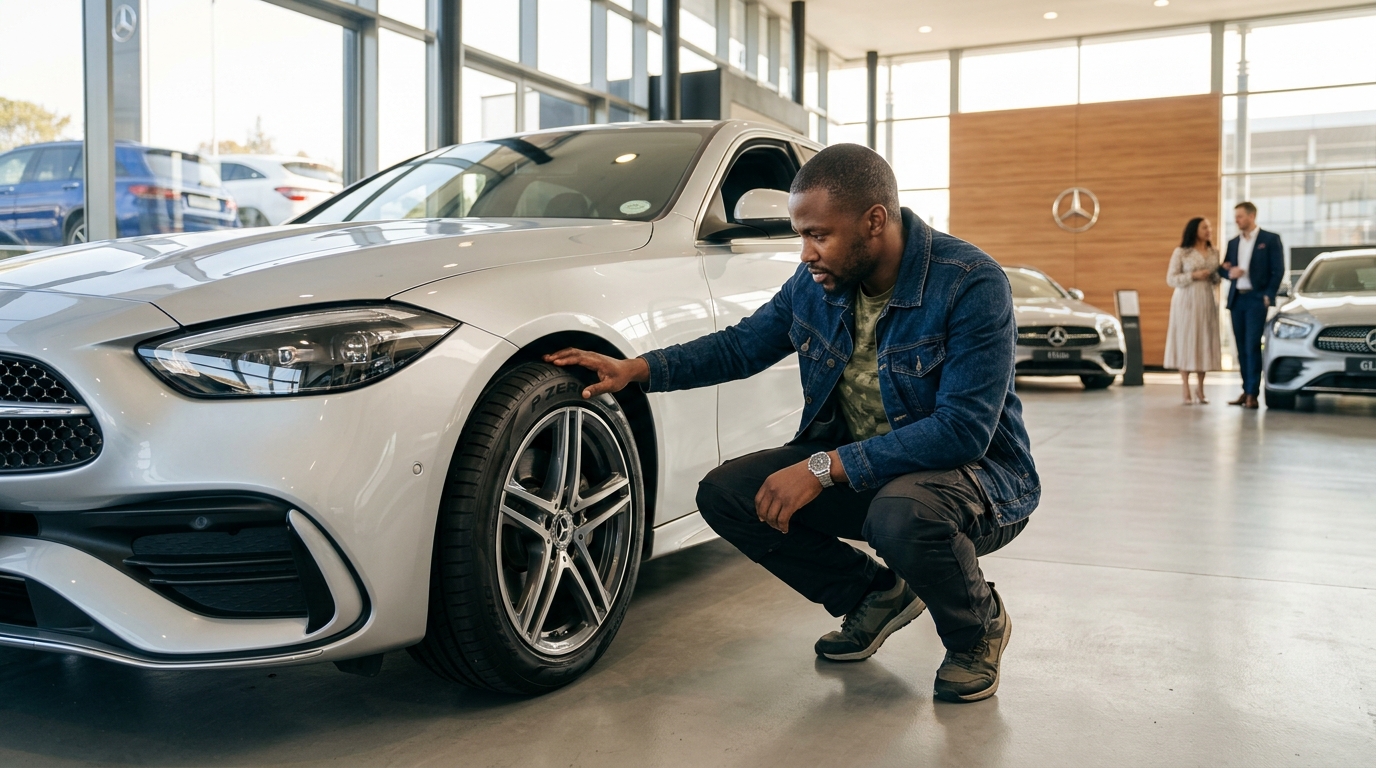
Exterior: - Uneven panel gaps (accident repair) - Mismatched paint colours - Tyre condition and wear patterns - Windscreen chips or cracks - Rust around wheel arches and door sills
Interior: - All electronics work (windows, mirrors, aircon, radio) - Seat condition and adjustments - Dashboard warning lights - Smell — musty smell may indicate water damage
Under the bonnet: - Oil level and colour (milky oil = head gasket issue) - Coolant level - Battery condition - Belt condition - Any unusual smells or leaks
Step 5: Test Drive
A proper test drive should be at least 20 minutes and include:
- City driving with stops and starts
- Highway driving at 120 km/h
- Bumpy roads to test suspension
- Hills to test engine and clutch
- Listen for unusual noises — knocking, grinding, squealing
Step 6: Professional Inspection
For any car over R100,000, invest in a professional pre-purchase inspection. Services like AA Technical Services or independent workshops charge R1,500–R3,000 and can save you from a R50,000 mistake.
Step 7: Negotiate the Price
Tips for negotiating: - Start 10–15% below asking price - Point out any issues found during inspection - Mention comparable listings at lower prices - Be prepared to walk away — there's always another car - Cash buyers have more negotiating power
Step 8: Complete the Sale
Once you've agreed on a price:
1. Verify the seller's ID matches the NATIS document 2. Complete a sale agreement (template available from any traffic department) 3. Submit change of ownership at the traffic department within 21 days 4. Transfer insurance to the new vehicle 5. Keep all paperwork safe
Common Scams to Avoid
- Clocked odometers — Check service history matches mileage
- Outstanding finance — Always check the NATIS document
- Stolen vehicles — Verify VIN number matches all documents
- Deposit scams — Never pay a deposit without seeing the car in person
- Too good to be true — If the price seems unrealistically low, it probably is
Find Your Next Car on dbAuto
Browse thousands of quality used cars across South Africa: